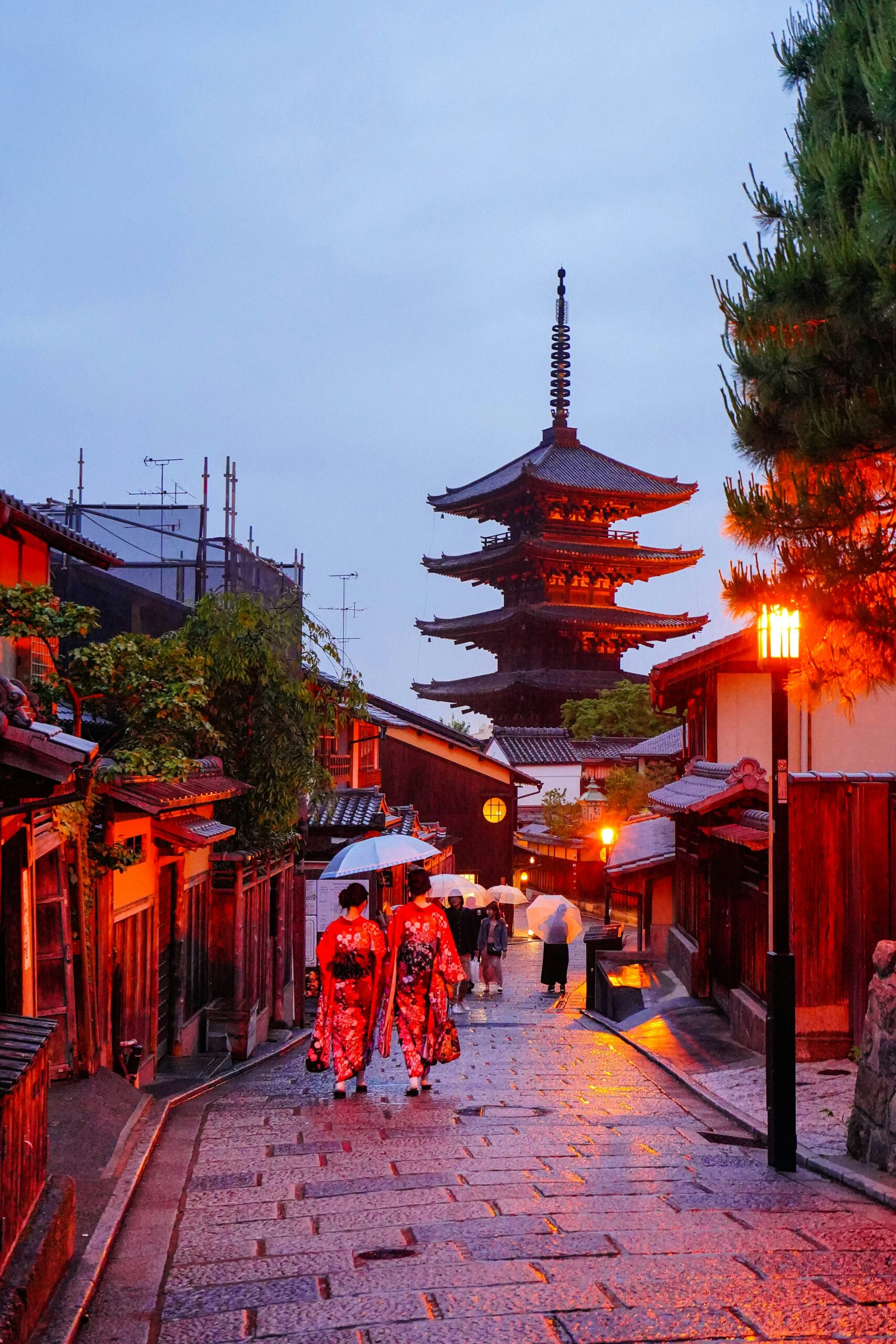
Once you’ve rented your kimono, the next question is where to go. Kyoto has no shortage of photogenic backdrops, but not all of them are created equal — some get overwhelmed by crowds by mid-morning, others have strict no-photography rules you’ll want to know before you arrive. Based on visitor reviews and on-the-ground reports, here’s how five of Kyoto’s most popular kimono photo spots actually compare.
1. Higashiyama District (Ninenzaka & Sannenzaka)
The stone-paved slopes and traditional townhouses of Higashiyama are Kyoto’s postcard image, and reviewers consistently rate it as the most naturally photogenic backdrop for kimono photos — you’ll blend right in, since it’s also the neighborhood with the highest concentration of kimono rental shops.
Best time: Early morning (7:00–8:30 AM). By mid-morning, the narrow streets fill shoulder-to-shoulder with visitors.
Good to know: Some side streets and alleys here — including sections of Ishibei-koji — are private property where photography is banned outright, with fines posted in some spots. Look for signage marking public vs. private paths before setting up a shot.
2. Kiyomizu-dera Temple
The temple’s iconic wooden stage and vermillion pagoda offer some of the most dramatic architectural backdrops in the city.
Best time: Right at opening (6:00–7:30 AM), when the grounds are still quiet and you avoid the harsh afternoon backlight.
Good to know: Tripods and monopods aren’t allowed on the approach paths or stairs, and reviewers note the uphill walk in sandals can be tough if you’re not used to walking in a kimono.
3. Arashiyama Bamboo Grove
The soaring bamboo canopy is one of Kyoto’s most striking natural settings, and reviewers say the way morning light filters through it makes almost any kimono color pop.
Best time: Early morning (7:00–8:00 AM) — past 9 AM, tour groups and rickshaws fill the path completely.
Good to know: This is the one spot on this list that’s genuinely far from the Higashiyama rental shops — plan on 40–50 minutes of travel each way, which matters if you’re on a rental return deadline.
4. Gion (Shirakawa & Hanami-koji Area)
The willow-lined canals and traditional teahouse streets around Tatsumi Bridge give a quieter, more atmospheric feel than Higashiyama’s bustle. If you have extra time, Pontocho’s narrow riverside alley just across the river offers a similar mood with fewer crowds.
Best time: Mid-morning (8:30–10:00 AM) or golden hour around sunset.
Good to know: This is the strictest area on the list for photography rules — much of Hanami-koji is private property where photography is banned (with posted fines), and photographing geisha or maiko without permission is firmly off-limits. Stick to public streets like Shirakawa and the area around Tatsumi Bridge.
5. Quiet Temple Gardens (e.g., Kennin-ji, Entoku-in)
For a break from crowds, temple gardens offer a different kind of shot entirely — think Zen rock gardens and tatami interiors rather than street scenes.
Best time: Right after opening (9:00–10:00 AM) or shortly before closing (3:30–4:30 PM).
Good to know: Casual photos between friends or family (phone or personal camera) are generally fine, but if you’re planning to bring along a hired photographer — including the growing number of Airbnb Experience or Klook photo-tour services — many temples require advance permission for that kind of shoot. Admission fees also apply separately, so it’s worth checking the rules at the entrance desk either way.
Which Spot Should You Choose First?
If you’re renting your kimono in the Higashiyama area (like at Okimono-ya’s Kiyomizu store), reviewers consistently point to Higashiyama itself as the best first stop — it’s steps from most rental shops and delivers that classic “this is Kyoto” feeling immediately. Temple gardens are the strong second choice for a calmer, crowd-free alternative. Arashiyama’s bamboo grove is stunning but far enough from Higashiyama that it’s better suited to a dedicated half-day trip — or as your first stop if you’re renting a kimono in Arashiyama itself.
コメント